
Every few months someone tells me that consulting is finished. Why pay a team of experts, the argument goes, when a chatbot will produce a strategy, a market analysis or a policy brief in thirty seconds, for the price of a monthly subscription?
I disagree. Not because I fear the technology. At Praxis we build and deploy ethical AI and technology solutions every day, and I believe in what they can do. I disagree because the people making this argument have confused producing an answer with taking responsibility for it. Those are not the same thing, and the difference is where the real cost lives.
Advice is cheap. Accountability is not.
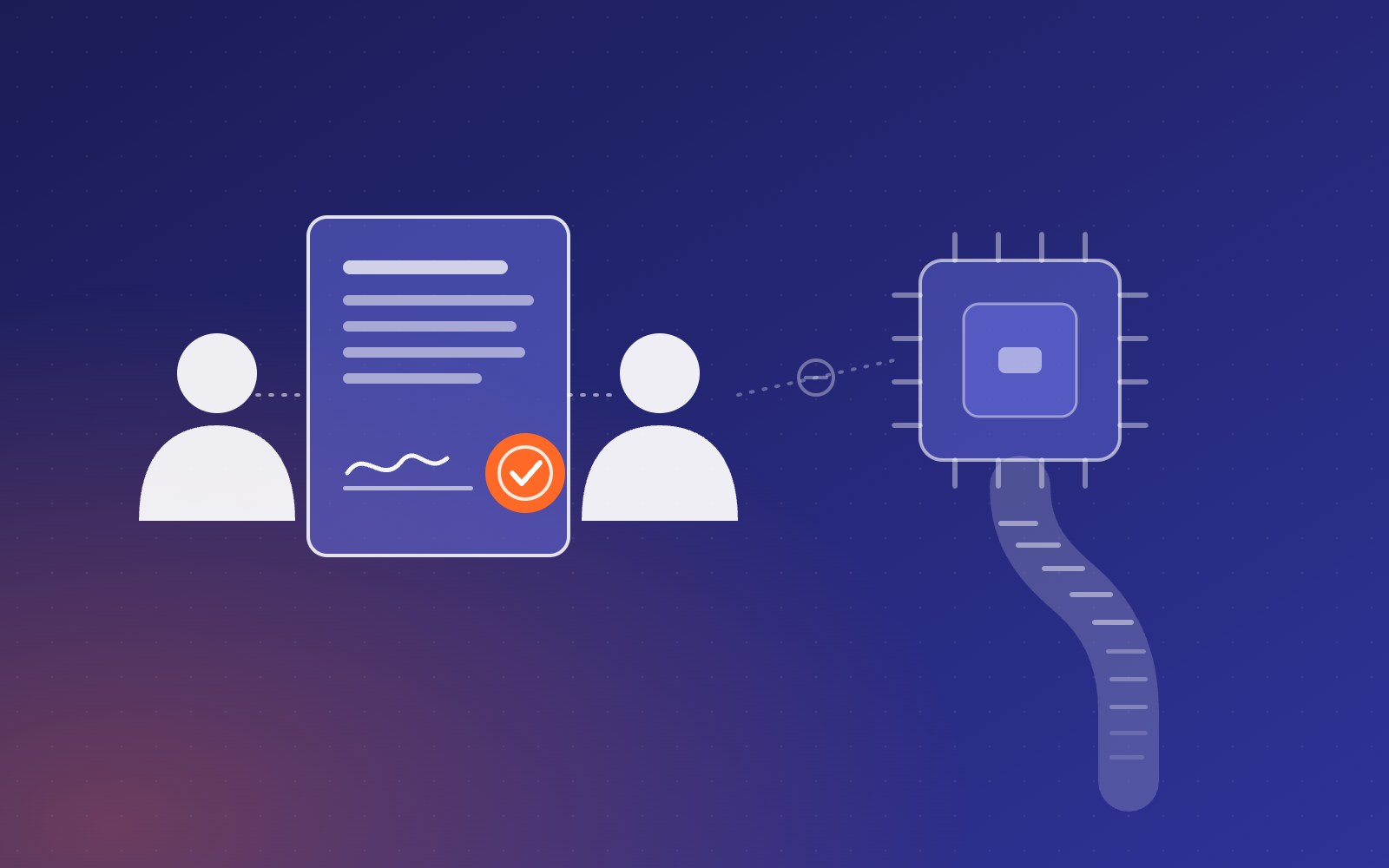
When you engage a consultant, you are not only buying words on a page. You are buying a signature. A firm that advises you enters a contract, carries professional liability, puts its reputation on the line and can be called to account, in a boardroom, before a regulator or in a court, if its advice is negligent.
Now read the terms of the AI tool on your desk. OpenAI’s terms of use state that its services are provided “as is”, and cap the company’s aggregate liability at the greater of what you paid in the previous twelve months or one hundred dollars. One hundred dollars. That is the value the vendor itself places on its responsibility for the advice your institution might bet its future on.
This is not a criticism of one company. It is how these products are sold. And it means that when AI-generated advice goes wrong, the liability does not disappear. It lands on you.
The courts have already made this plain:
- In 2023, a federal judge in New York sanctioned two lawyers and their firm after they filed a brief citing court decisions that ChatGPT had invented. The chatbot was not fined. The humans were.
- In February 2024, a Canadian tribunal held Air Canada liable for wrong advice about bereavement fares that its website chatbot gave a grieving passenger. The airline argued the chatbot was responsible for its own actions. The tribunal rejected that argument outright.
A line widely attributed to a 1979 IBM training slide puts it better than I can: “A computer can never be held accountable; therefore a computer must never make a management decision.” IBM’s own archivists have not been able to locate the original, but nearly fifty years later the principle has lost none of its force.
The accountability test cuts both ways
Let me be fair, because fairness is the point. In October 2025, Deloitte agreed to refund part of an AU$440,000 fee to the Australian government after a report it produced was found to contain fabricated references and a made-up quote from a judge. A revised version disclosed that a generative AI tool had been used in drafting it.
Some read that story as proof that consultants are no better than the machines. I read it the opposite way. A researcher found the errors, the press reported them, a senator demanded the full fee back, and the firm repaid part of it. That is accountability working. Try getting a refund from a chatbot.
The lesson is not “replace the consultant with the tool”. It is that a consultant who hands your problem to an unchecked tool has stopped being a consultant. Expertise means verifying what the machine produces, understanding the context it cannot see and standing behind the result.
“Consultants are expensive.” Compared with what?
There is a proverb older than any of us: penny wise, pound foolish. Nowhere is it truer than in institutional decisions.
Consider HealthCare.gov, the website at the centre of the United States’ health insurance reforms. When it launched in 2013, it failed so badly that most visitors could not even sign up. The Government Accountability Office later found that the cost of the two main contracts rose from about $86 million to $294 million, and blamed changing requirements “exacerbated by oversight gaps”, skipped readiness reviews and weak contract management. The expensive part was not the expertise. It was the absence of it at the moments that mattered.
Or consider the AI rush itself. A 2025 report from MIT’s NANDA initiative, The GenAI Divide, found that about 95 per cent of corporate generative AI pilots delivered no measurable financial return. Its authors blamed not the models but a “learning gap” between the tools and how organisations actually work. Tellingly, AI tools bought in from specialised vendors and partners succeeded roughly twice as often as those built entirely in-house. Organisations that tried to save on guidance paid for it in failed pilots.
Every institution that skips the diagnosis to save on the doctor’s fee pays twice: once for the wrong cure and again to undo it.
When cheap becomes deadly
In my field, the cost of bad advice is not only counted in money.
A landmark study in The Lancet estimated that, in 2016, about 8.6 million deaths across 137 low- and middle-income countries could have been prevented by health care. Of those, about 5 million were among people who did reach a health system but received poor-quality care. That is more than the 3.6 million who never received care at all.
Read that again. Access is not the whole problem. The quality of the system is. Its design, its data, its training, its supervision and the decisions made by the people who run it. These are exactly the things that good research, sound training and honest advisory work exist to strengthen. When a ministry or a hospital decides that expert support is a luxury, the bill does not vanish. It is paid by patients.
A fish rots from the head, the saying goes. So does a health system. And no chatbot will sit with a district health team, look at their registers, notice that the referral form is filled in after the patient has already left, and ask why.
What AI is good for, and what it is not
I want to be clear. AI is a powerful assistant, and institutions that ignore it will fall behind. It can summarise a thousand pages, draft a first version of a report, clean a dataset or spot a pattern no tired analyst would see at midnight. We use it this way ourselves, under human review, and we design systems that keep people in charge of decisions that matter. That is what we mean by ethical AI: technology that serves judgement rather than replacing it, and that starts with the real workflow rather than the sales demonstration.
But AI cannot:
- understand the politics of your organisation, or the history behind a decision;
- sit across the table and tell a minister, a board or a chief executive what they do not want to hear;
- be held accountable when its advice causes harm;
- carry the trust that comes from having done the work, in the field, with people.
The right question is not “consultant or AI?” It is “who is accountable for this decision, and do they have the expertise and the tools to make it well?”
The real price of advice
If you think expertise is expensive, try the alternative. Try a failed system rollout, a policy built on invented evidence, a pilot that never pays back, or a clinic that sees the patient but misses the diagnosis.
The cheapest advice is the advice you never have to undo. That is what a good consultant sells. And until an algorithm can sign its name, stand before a court and look you in the eye, that is something no machine can offer.
At Praxis Global Institute, we combine applied research, practical training, ethical AI and strategic advisory, and we put our name to our work. If your institution is weighing a major decision, let’s talk. Or see examples of our work first.
Simon Aseno
Simon Aseno is President and CEO of Praxis Global Institute, where he leads work connecting research, technology, education and advisory to strengthen people, systems and institutions.
Facing a similar challenge in your institution?
We work with teams on research, data, digital systems, and learning that hold up in practice.